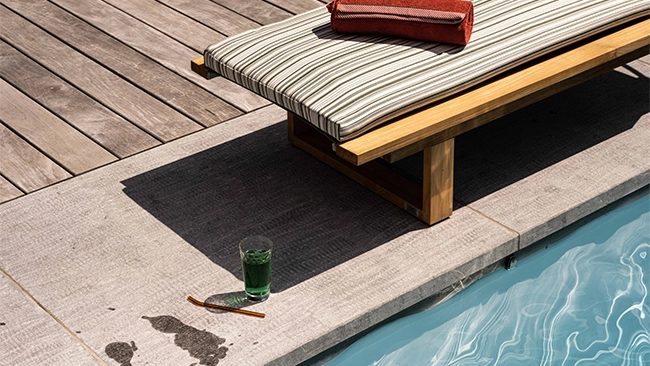
By mid-summer, patio furniture, poolside lounges, and boat biminis have taken a beating from sunscreen, pollen, sudden downpours, and humid heat. For custom makers, fabricators, and design professionals, this is the peak time to help clients protect their investments and ensure their high-performance installations outlast the summer grind.
Read on to understand how different threats attack outdoor setups and why having the right maintenance strategy makes all the difference.
The Hidden Threat: Organic Debris vs. Mildew
A common misconception is that mold and mildew grow directly on performance fibers. In reality, high-quality textiles like Sunbrella® are inherently resistant to mold and mildew growth. The real culprit is the invisible film of summer debris that settles on top of the fabric.
Tree pollen, dust, bird droppings, and oily sunscreens create a microscopic nutrient layer. When you add high summer humidity or a sudden downpour to that mix, you create a perfect greenhouse environment for spores to thrive. To protect your investment, regular cleaning is essential to strip away that food source before stubborn stains can take hold.
Seam Construction: The First Line of Waterproofing
Waterproof fabric alone cannot guarantee waterproof covers. Every needle hole creates a potential leak point, making seam construction just as important as the Canvas Fabric itself. For rain-exposed furniture covers, look for strategically placed seams that limit water pooling and avoid high-stress areas whenever possible. Bound, sealed, or taped seams can help close openings created during sewing, while reinforced corners and attachment points improve durability where covers experience repeated pulling and abrasion.
When specifying Outdoor Fabric for a project, ask how the seams will be finished and whether the construction is intended for light weather protection or sustained exposure. A resistant coating may protect the fabric surface, but careful stitching and seam sealing are what help keep water from entering through the finished cover.
Ventilation and Secure Fit Features
A well-designed cover should keep rain out without trapping humid air underneath. Mesh vents allow condensation to escape, which helps reduce moisture buildup and supports the long-term durability of Outdoor Furniture Fabric. They are especially useful on large furniture covers, where warm, damp air can remain trapped for extended periods.
A secure fit is just as important. Adjustable straps, buckles, and drawcords help keep furniture covers in place during wind, while reinforced tie-down points distribute tension more evenly. These details reduce wind lift, shifting, and water pooling. For Outdoor Furniture exposed to changing weather, combine breathable vent placement with a snug shape that follows the furniture without pressing tightly against sharp edges.
Choosing the Right Cover Fabric
Material selection depends on the balance of sun exposure, rain, handling, and budget. Solution Dyed Acrylic is known for strong UV and fade resistance, making it a good choice for visible Outdoor Furniture applications that receive intense sunlight. It is also resistant to mildew when kept clean and allowed to dry. However, acrylic is generally water-repellent rather than fully waterproof, so the finished cover still depends on its construction, treatment, and seam design.
Solution-dyed polyester is another practical option for furniture covers. Compared with acrylic, it often provides a more utility-focused combination of durability, abrasion resistance, and cost efficiency. A common specification is 600D solution-dyed polyester. The “600D” refers to denier, a measure of fiber thickness; it signals a heavier construction than lighter cover fabrics, although coating quality, weave, and finishing also affect performance. For rain-exposed or frequently handled covers, compare the complete fabric system rather than choosing by denier alone.
For wholesale buyers, Ottertex waterproof canvas and other Canvas options may suit projects that require a coated, water-resistant surface. Before selecting any Canvas Fabric, confirm whether the product is intended for outdoor covers, how it performs in prolonged moisture, and whether the coating is compatible with the planned sewing and cleaning methods.
What to Request When Buying Cover Fabric Wholesale
Before placing a bulk order, request a complete specification sheet and a physical sample. At minimum, compare:
- Fabric weight or denier, along with weave and thickness
- Coating type and stated waterproof or water-repellent performance
- UV resistance, colorfastness, and expected outdoor durability
- Tear strength, abrasion resistance, and seam performance
- Available widths, roll lengths, colors, and finish options
- Cleaning guidance, warranty terms, and recommended applications
- Wholesale minimums, lead times, sample policies, and shipping terms
These details help buyers evaluate Outdoor Furniture Fabric on performance rather than appearance alone. When comparing U.S. wholesale sources, ask whether the supplier stocks the material domestically, provides consistent lot specifications, and supports repeat orders. A reliable source should be able to explain the difference between a coated waterproof Canvas and a naturally resistant Outdoor Fabric, helping you match the material to the cover’s exposure and intended service life.
Spotlighting A Solution: Sunbrella Renew™
Unlike generic household cleaners that can strip away performance coatings or damage fabric construction, Sunbrella Renew Mold & Mildew Stain Remover is a targeted restorer.
The Sunbrella Renew bottle features a specialized, dual-action nozzle designed for versatile cleaning. Use the wide spray setting to efficiently cover large, flat surfaces like chaise lounge cushions or boat covers. For vertical surfaces, such as zipper tape or tight awning seams, the targeted foam setting clings directly to stains, giving the formula more time to lift discoloration without running off.
For independent upholstery and canvas workrooms, the mid-summer slump is a perfect touchpoint for your business. Reaching out to your customer base with maintenance reminders or offering a specialized mid-season detailing service is an excellent way to drive shop traffic and reinforce your role as an industry expert.
Need to stock your care items for the busy summer season? Explore the full lineup of Sunbrella Cleaners and check out our Cleaners Guide for information on which cleaner is the best for your project.
Written By

Katelyn P. Bell