


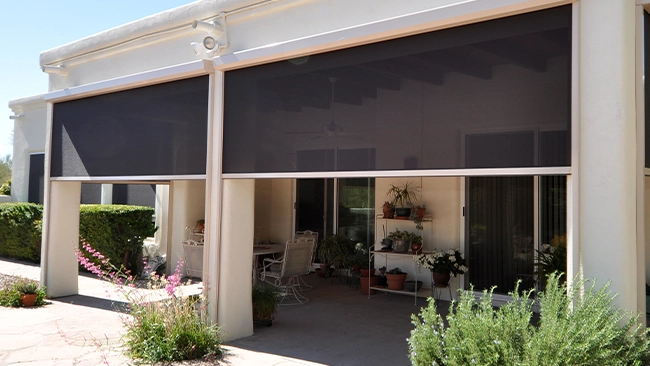
When it comes to choosing the right solar screen fabric, a few factors rise to the top: openness, UV protection, and thickness. Whether you’re shading a sunroom, enclosing a patio, or retrofitting an existing screen door, Phifer SunTex products offer a range of options tailored to different light control needs and install environments.
Phifer SunTex — A Smarter Screen for Sun Protection
Phifer Suntex is a family of high-performance solar screen fabrics designed to block harsh sunlight while maintaining airflow and visibility. Positioned between traditional insect screen and heavy awning fabric, SunTex falls into the category of solar screening mesh.
Crafted from strong vinyl-coated polyester, SunTex is available in multiple weave densities, so you can choose how much of the sun’s heat, glare, and exposure you want to block. It’s part of Phifer’s line of advanced screening solutions and comes in a range of colors and openness factors (typically from 80% to 95%).
Made in the USA, Phifer SunTex products are also GREENGUARD® certified, making them suitable for use in indoor and adjacent spaces where air quality is a concern. Additionally, Phifer SunTex fabrics are infused with Microban antimicrobial product protection for an added level of defense against microbes such as mold and mildew that can damage the shades.
SunTex screen fabric can be used to fabricate:
- Patio roll-down shades
- Window sun screens
- Screen doors
- Fixed patio screen systems
- Retractable screen systems
- Privacy screens & pergola shades
- RV and camper window covers
Openness & UV Blocking
One of the biggest differences between SunTex screen styles is the openness factor, which refers to how tightly the fabric is woven and how much light and air it lets through.
| Product | Openness | UV Blockage | Best For |
|---|---|---|---|
| SunTex 80 | ~20% | Blocks 80% of sun’s rays | High airflow & visibility |
| SunTex 90 | ~10% | Blocks 90% of UV | Balance of shade & visibility |
| SunTex 95 | ~5% | Blocks up to 95% | Maximum privacy & sun control |
More openness means better airflow and outward visibility (like with Phifer SunTex 80), but slightly lower UV protection. Less openness (like with Phifer SunTex 95) increases UV blocking and daytime privacy, but reduces ventilation.
Heavier Mesh or Flexible Fit? Match to Your Setup
SunTex fabrics are designed for added durability in high-exposure areas. But with that strength comes some differences in flexibility, which matters when selecting for specific builds.
The thicker mesh of SunTex 80 and SunTex 90 is not recommended for roller shade or motorized installations where flexibility is key. For lightweight retractable use, consider using SunTex 95, which has a lower gauge mesh weight and is designed for compatibility with roller shades.
Style Meets Function: Color Choices & Custom Sizes
In addition to performance, Phifer SunTex fabrics come in a variety of colors to match project aesthetics. Available in a selection of neutral, earthy tones like black, gray, stucco, and dark bronze, the fabric is designed to complement a wide range of exterior styles and architectural finishes.
Each color affects visibility differently. For instance, darker tones provide better outward views with less visible glare, while lighter shades reflect more heat and offer a softer visual profile.
You can also choose from several standard widths and roll lengths, giving you the flexibility to order just what you need or stock up for bulk production.
Who Uses Phifer SunTex?
If your work involves managing sunlight, outdoor comfort, or energy efficiency, chances are you’ve touched a project that could benefit from Phifer SunTex. These premium window screens and exterior shading fabrics are ideal for:
- Shade product fabricators and awning manufacturers
- Marine enclosers and canvas shops
- RV and camper outfitters
- Window screen and home exterior contractors
- Outdoor furniture makers and upholstery pros
- Architects and designers focused on passive cooling solutions
- DIY homeowners building privacy screens or patio shades
From Plans to Panels: When to Install Phifer SunTex
Phifer, a family-owned manufacturer headquartered in Tuscaloosa, Alabama, has been a global leader in screening and mesh solutions since 1952. With a strong focus on innovation, quality, and American manufacturing, Phifer introduced its SunTex screen line in the late 20th century to meet the rising demand for durable, UV-blocking mesh fabrics that outperformed traditional insect screening.
SunTex is typically used after initial designs and measurements are complete. Here’s where it fits in:
- After measuring your frame or outdoor space, the fabricator (or DIYer) cuts SunTex to size based on the exact fit required.
- It may be used alongside aluminum framing, zipper tracks, hem bars, or even sewn into custom panels with heavy-duty thread and binding tape.
- Depending on the project, SunTex may be attached with staples, grommets, spline channels, or sewn into zippered enclosures.
- In retractable systems, it's used as the face panel of roll-down screens and requires precise alignment to ensure smooth operation.
Tips for Seamless SunTex Results
Techniques for Working with SunTex
To get the best performance and longest lifespan from your SunTex fabric, it's important to use the right tools, methods, and finishing techniques. These techniques not only help the product look more professional but also ensure it stands up to weather, wind, and everyday use. Keep these tips in mind:
- Use heavy-duty polyester thread when sewing hems or seams.
- If cutting manually, use a hot knife for sealed edges and to prevent fraying.
- Reinforce edges that will see tension or movement (e.g., in retractable shades) with binding or hem tape.
- Pair with compatible hardware like screen spline, zipper track, or clip systems depending on the installation style.
- Mount with tension to prevent sagging, especially in large panels.
Why Choose SunTex: Performance You Can See and Feel
Phifer SunTex isn’t your average screen fabric. It’s specifically engineered for superior solar protection, airflow, and durability, making it a smarter, longer-lasting choice compared to traditional fiberglass insect screens or heavy-duty awning fabrics.
Here’s what sets SunTex apart, and why it’s trusted by professionals across the marine, shade, and outdoor living industries:
- UV Protection: Blocks up to 95% of harmful UV rays depending on the weave, helping reduce indoor temperatures and protect furnishings from fading.
- Energy Efficiency: Acts as a passive cooling solution, cutting down on heat gain and easing the load on AC systems.
- Rugged Durability: Built with vinyl-coated polyester that resists mildew, fading, and tearing, even in coastal or high-humidity environments.
- Pet and Kid Friendly: The thick mesh stands up to claws, kicks, and general wear, ideal for screened-in porches or pool surrounds.
- Aesthetic Flexibility: With neutral color choices and varying opacity, it improves comfort without disrupting your view or design.
Buy the Perfect Phifer SunTex Fabric for Your Project
Looking for genuine Phifer SunTex solar shade fabric? You’ll find it at Trivantage® — your one-stop shop for premium outdoor performance fabrics and shade-making supplies.
At Trivantage, you can browse a wide range of SunTex options, including different openness levels (80, 90, 95), color selections, and roll sizes to fit any size project. Plus, we offer fast shipping, bulk ordering, and expert customer support to help with your next fabrication job, whether you’re a seasoned professional or starting your first sun shade project.