


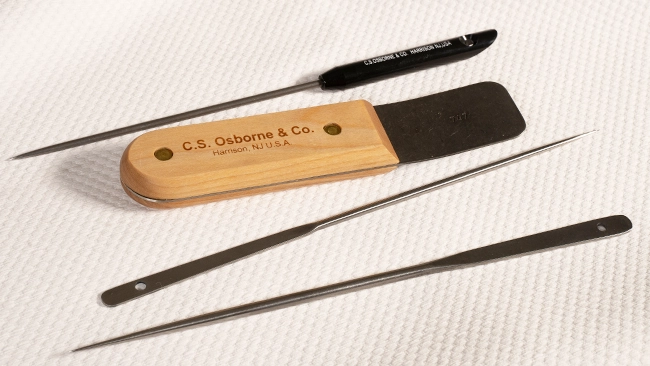
Fabric installation in any upholstery project — residential, commercial, marine, or automotive — requires tools that deliver precision, control, and long-term durability. For fabric tucking and fiber regulating, professionals rely on purpose-built hand tools designed to meet the demands of detailed upholstery work. At Trivantage, we offer a trusted selection of tools from C.S. Osborne, a leading name in the trade for over a century. Osborne’s line of tucking and regulating tools is engineered for the finishing and stuffing phases of upholstery, helping fabricators produce clean seams, balanced padding, and long-lasting results.
A Closer Look at Tucking and Regulating Tools
Osborne Fabric Tucking Tools are hand tools designed specifically for upholstery work. Made primarily of forged steel with contoured rubber or wood handles, these tools fall into the broader category of upholstery hardware and hand tools. Examples include:
- Fabric Tucking Tools – For tucking fabric precisely into grooves along frames, such as on automobile or furniture panels. A variety of options exist in the market, like the Osborne Fabric Tucking Tool #747, that may offer differing lengths, materials, and performance features.
- Regulating Tools – Used for adjusting the placement and tension of stuffing, batting, and fabric layers in seats and more. Like the Osborne Upholstery Regulator #520-10, these tools are designed to make your job easier and your finished product more polished.
Professionals Who Rely on These Tools
From professional upholsterers to DIY enthusiasts, anyone installing wall upholstery, headliners, or stretched fabric panels can benefit from a reliable fabric tucking tool. These hand tools are especially popular among contractors who work with the Clean Edge System or other fabric wall installations, ensuring a neat and professional finish.
In many cases, they’re part of a broader upholstery tool kit that also includes regulators, tackers, and other finishing tools for complete fabric installation projects.
Osborne fabric tucking and regulating tools are used mainly by:
- Upholsterers (both furniture and automotive)
- Marine fabricators
- Interior designers who do custom upholstery
- Furniture manufacturers or restorers
- RV and aviation interior specialists
Where These Tools Fit in the Fabrication Process
Founded in 1826, C.S. Osborne & Co. remains one of the oldest toolmakers in the U.S. Their upholstery tools have maintained a consistent presence in the trade for well over a century. While modern versions may feature updated finishes or ergonomic improvements (like modern features like rubberized handles and hardened steel), the core design of Osborne’s tucking and regulating tools remains functionally unchanged: simple, trusted, and highly effective on the job.
These tools are typically used during the installation and finishing stages of upholstery after the fabric has been measured, cut, and sewn. More specifically:
- Osborne Upholstery Regulator Light #306-1/2, #10 works best for delicate applications, thin upholstery fabric, or projects where you need more finesse than force, such as aligning seams in wall upholstery or smoothing padding in a headliner.
- Osborne Upholstery Regulator Heavy #306-1/2, #10 is built for tougher jobs, thicker materials, and firm padding where extra leverage and strength are required. It’s a good choice when working with dense fabric wall installations, heavy upholstery fabric, or multi-layered builds.
When paired with a speed roller or tacker, either regulator can help achieve a fast installation without sacrificing quality. The Osborne Upholstery Tool Kit #B-11 is a versatile set with multiple essential hand tools for upholstery projects of all sizes.
Benefits and Functional Features
Osborne has been a trusted name in finishing tools for over a century, offering quality craftsmanship and ergonomic design. Manual tucking with generic tools can lead to uneven folds, surface puckering, or fabric damage. Osborne's specialized tools are designed to reduce these risks.
The quality materials and attention to detail ensure each piece in your tool kit will hold up to repeated use over time. Some key performance benefits of using these tools include:
- Slim, durable flat blade profiles that slide into tight grooves with ease
- Ergonomic wooden or rubber handle options for all-day comfort
- Hardened stainless steel construction for long-term durability
- Multiple sizes and tip angles to suit different upholstery applications
How To Use Fabric Tucking & Regulating Tools
Using these tools properly helps avoid fabric distortion and ensures a clean finish line.
Best Practices for Tucking Tools:
- Align the fabric over the groove.
- Using the tucking tool, gently press the fabric into the fabric track while maintaining even tension.
- Use your free hand to smooth the surrounding areas as you work along the edge.
- Continue tucking until the fabric sits flush.
- Trim excess if needed.
Best Practices for Regulating Tools:
- Use long, sweeping motions to shift stuffing without compressing it too tightly.
- Insert the regulator down the channel of a seat cushion and redirect filler evenly out to the corners.
- For tufted surfaces, regulate stuffing around buttons or stitching for a more uniform appearance.
Pro Tip: Apply working pressure with the rounded back of the tool, rather than the edge, to avoid snags in delicate fabrics and to maintain fabric integrity over time.
Shop Upholstery Tools at Trivantage
Before starting your next fabric installation, make sure you have the right tools in your shopping cart. Browse Trivantage’s full selection of upholstery tools to find the right fit for your project. From individually sold Osborne Fabric Tucking Tools to complete tool kits, you’ll find quality hand tools that make your work easier, faster, and more precise.
Whether you’re upholstering a vintage armchair or trimming out a leather auto panel, the right tools make all the difference, and at Trivantage, we’ve got them ready for your next project.