


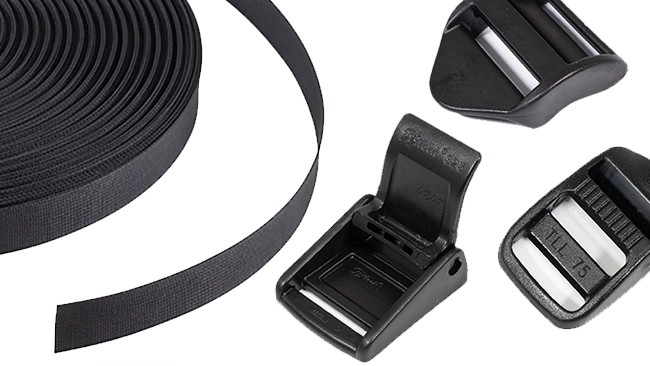
Cam buckles and Ladderlocs are lightweight, yet heavy-duty webbing buckles used to secure and adjust strapping and webbing. Common in marine, outdoor, and industrial fabric applications, they offer a clean, corrosion-resistant alternative to metal hardware.
At Trivantage, we offer a wide selection of professional-grade webbing fasteners built to perform in demanding environments. These components are trusted by marine fabricators, upholsterers, and outdoor gear makers who rely on durable, easy-to-use hardware that meets the standards of both function and finish.
What Are Cam Buckles and Ladderlocs?
A cam buckle uses a pivoting cam mechanism that presses down on the webbing when tension is applied. A ladderloc (also called a ladder lock) feeds webbing through a fixed path and holds it in place through friction alone. Fastex® cam buckles and ladderloc buckles are go-to options for light-to-medium duty adjustable strapping solutions.
Made for Fabricators, Sewers, and Makers On the Move
Anyone working with straps, harnesses, bags, tarps, or shade sails will likely rely on one or both of these parts during the assembly or finishing phase. These buckles are used across industries wherever webbing is involved, including:
- Marine fabricators and canvas shops
- Outdoor gear manufacturers (bags, packs, straps)
- Awning and shade installers
- Tactical gear producers
- Upholstery and furniture makers
- General industrial and custom sewing shops
Whether you’re installing adjustable straps or adding tension points, cam buckles and ladderloc split-bar designs help streamline the job.
From Utility to Innovation: A Brief History of Fasteners
- Pre-20th Century – Knots and Clasps: Early fastening relied on tied rope, sewn loops, and basic metal hardware.
- Mid-20th Century – Synthetics and Strap Systems: With polypropylene and nylon webbing becoming widespread, basic cam and tension buckles entered the market for industrial and military use.
- Late 20th Century – ITW Nexus Ladderloc Innovation: Plastic ladderloc buckles were popularized by ITW Nexus, offering lightweight, adjustable fasteners for outdoor, marine, and tactical applications.
- 21st Century – Smart Design: Today’s options include ladderloc split-bar and cam designs made to fit specific strap widths and strength needs.
The 21st Century Smart Design in Action
These components are typically introduced toward the end of the fabrication process, once the major structural elements are complete.
After cutting, sewing, and assembling fabric panels, webbing is stitched into place. That’s when buckles are:
- Threaded through webbing for adjustability,
- Tested for tension and fit, and
- Adjusted or positioned during the final fit-out.
Why Choose Cam Buckles & Ladderlocs Over Others
When it comes to securing webbing, Cam Buckles and Ladderlocs offer a practical, lightweight alternative to metal fasteners, sewn loops, or permanent closures. See how they measure up:
- Cam buckles: Rely on a rotating lever that clamps the webbing in place. The cam mechanism offers fast tensioning without slippage.
- Ladderlocs: Use a fixed friction-based system that locks the webbing in place as it’s pulled tight. They're best for static adjustments where the tension only needs to be set once and left in place.
One key benefit of both buckle types is their lightweight plastic construction, which offers durability without adding bulk. For marine or outdoor projects, this also means no rusting or corrosion, even in damp or saltwater environments.
Getting the Most From Your Cam Buckles & Ladderlocs
Cam Buckles
If you’re looking to have your strap stay tight but also be easy to release, a cam buckle is the way to go.
Best Practices
Cam buckles are designed for you to quickly adjust your buckle while maintaining a secure hold. They work best with flat, synthetic webbing, think polyester or polypropylene, and should always be threaded cleanly through the bottom slot.
Be sure to avoid bulky or twisted webbing, since this can prevent the cam from locking properly.
Common Uses for Cam Buckles
- Cargo straps
- Tent systems
- Adjustable shade panels
- Custom tarps or storage gear
Tips To Keep in Mind
Be sure to keep the webbing ends clean and sealed — heat-cutting works well. If you're threading through thick or stiff webbing, cutting the end at an angle makes it easier to feed.
And while cam buckles are designed to hold strong, be sure to avoid overtightening. The cam mechanism relies on tension and pressure, but too much can stress the webbing or the buckle itself.
How To Thread a Cam Buckle
- Flip open the cam lever to expose the teeth.
- Feed the webbing through the lower slot from the underside.
- Pull the webbing to the desired tightness.
- Release the lever. Tension will hold the strap in place.
- To release, press the lever again and back the webbing out.
Ladderloc Buckle
When a set-it-and-forget-it hold is what you’re after, Ladderlocs are up to the task.
Best Practices for Friction-based Fastening
Ladderlocs are simple, strong, and best used when the strap being used is adjusted once and stays put. They hold through friction, which means the threading pattern matters. Always keep tension on the strap to maintain grip.
Also, be sure to match buckles to the appropriate webbing width, which is typically 1 inch or 1.5 inches. Consider using polypropylene webbing for environments prone to moisture.
Ideal Applications for Ladderlocs
- Bags and backpacks
- Seat and cushion straps
- Outdoor covers
- Shade sails or canopies with adjustable components
Easy Tips & Tricks
Make sure the webbing matches the width of the Ladderloc slot for a snug fit. If it’s too narrow, it may slip under load. You can also stitch a stop at the end of the webbing to keep the buckle from sliding off during use or washing.
Threading Made Easy: Ladderloc Step-by-Step
- Thread the webbing up through the bottom slot.
- Bring it over the center bar.
- Feed it back down through the top slot.
- Pull the free end to tighten.
- Once set, tension will hold it in place — no extra hardware needed.
Shop All Plastic Buckles for Webbing
Find the right buckle for your next project. From cam buckles to Ladderlocs and related products, Trivantage carries a complete selection of plastic fasteners designed to pair with flat webbing. Explore options by size, style, and function, all built for professional performance in marine, outdoor, and industrial applications.