


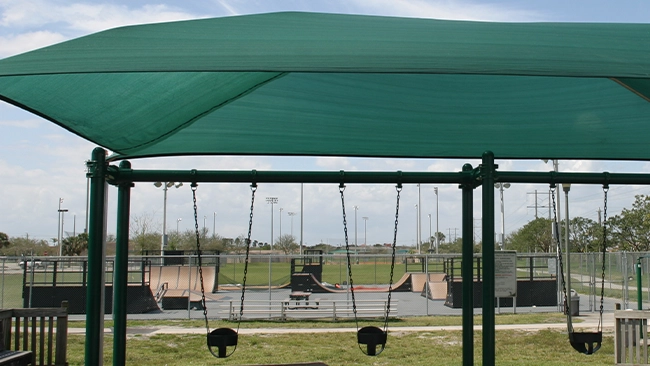
Fabric load is an essential aspect of shade sail planning, engineering, installation, safety, and longevity. It refers to the forces or stresses that act on the membrane of shade sails when they are tensioned. These forces come from various factors like wind, rain, and gravity, making fabric load a crucial concept for the performance and longevity of tension structures.
Types of Fabric Load
Fabric load consists of a combination of different forces that act on the membrane. Below are the primary types:
- Dead Load: The weight of the fabric and its supporting hardware.
- Live Load: Forces from temporary factors like wind, rain, or snow.
- Pre-Stress Load: Tension applied during installation to ensure stability.
- Dynamic Load: The effect of variable forces such as wind gusts or sudden weather changes.
How Engineers Manage Fabric Load
Engineers use advanced modeling software to predict how shade sails will react under different conditions. By applying safety factors, they ensure that structures can sustain both expected and extreme environmental challenges. Using techniques like catenary curves or hypar shapes aids in even load distribution, reducing sagging and ponding.
Tensioning and Material Choice
Tensioning is essential during the installation process. Proper pre-tensioning prevents deformation and fluttering under stress. Additionally, choosing the right materials and hardware is critical for the durability of shade sails. Ideal materials should have:
- High tensile strength to handle continuous stress.
- Dimensional stability to retain their shape over time.
- Resistance to UV damage and corrosion for long-term performance.
Ensuring Long-Term Performance
Properly accounting for all aspects of fabric load, from structural design to material selection, is key to ensuring the longevity and reliability of shade sails. By considering these factors, you can achieve structures that perform well under varying conditions and remain aesthetically pleasing for years.