


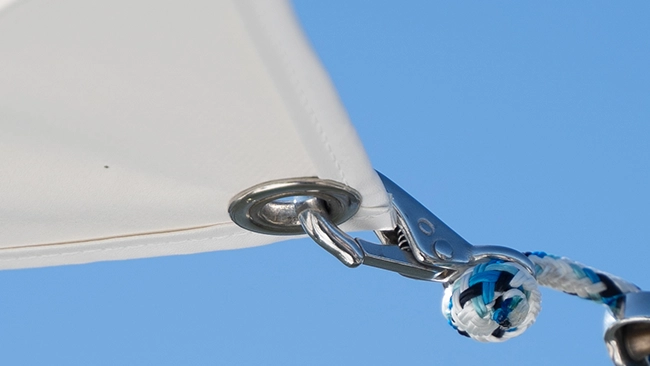
When it comes to securing tarps, canopies, or camping tents, having the right hook hardware is essential for durability, safety, and ease of use. From designing outdoor gear to building sun shade structures or manufacturing heavy-duty tarp systems, choosing the right tarp hooks can make the difference between a secure setup and a potential failure in the field.
At Trivantage, we supply spring snaps, bolt snaps, and spring hooks (often referred to as carabiner hooks). Each offers specific benefits depending on how and where it’s used.
Common Hook Types for Tarps and Tents
Snap hooks and spring hooks fall under metal hardware for fabric structures, typically used with tarps, tents, covers, and shade systems. These all-in-one attachment components are built to provide secure yet quick-release capabilities for projects that require frequent setup, removal, or repositioning.
1. Spring Snaps
A versatile choice for fastening tarps, camping accessories, or tent clips. The spring snap uses a simple spring-loaded gate that opens when you press on the lever and closes automatically when released.
These hooks are quick to connect and disconnect, making them ideal for tarp tie-down systems, hammocks, and gear that needs frequent adjustment.
2. Bolt Snaps
Known for their secure closure, bolt snaps feature a spring-loaded lever housed within a cylindrical body. This design prevents accidental release, even under tension, making it a preferred option for heavy-duty tarp applications, marine hardware, and gear storage. They work well with bungee cords and ropes in camping tarp setups.
3. Spring Hooks (Carabiners)
Also referred to as “carabiner hooks,” spring hooks are lightweight yet strong. They offer quick clipping ability for tent hooks, tarp clamps, and camping gear attachments. While not designed for climbing or personal load-bearing, they’re excellent for outdoor camping products, industrial shade sails, and windproof canopies.
4. Other Styles
While Trivantage’s primary offerings focus on durable, quality metal hooks, certain applications benefit from plastic hooks for lighter loads and suction cup hooks for temporary attachment to smooth surfaces. These can be useful for indoor/outdoor retail displays or portable awnings.
Common Industries and End Users
Hook hardware is widely utilized across commercial, industrial, and marine markets. Common users include:
- Tent and awning fabricators
- Marine canvas professionals
- General contractors installing shade sails or canopies
- Equipment cover manufacturers
- Cargo, trucking, and utility specialists
- Event production companies
Hook Applications During Fabrication and Installation
While hooks may seem like a finishing detail, they’re typically considered in the design and planning stage when layout, load requirements, and attachment points are first established. Correct hook selection ensures the long-term usability of the product and plays a role in the overall hardware system.
Hooks are primarily installed during the finishing and installation phases, either sewn into webbing loops, attached to grommet eyes, or paired with D-rings and straps. Their role is to anchor the fabric product to a structure, frame, or compatible hardware component.
A Brief History of Hook Hardware
Hook-style fasteners have been used for centuries to secure tarps, sails, and fabric structures, especially in maritime and agricultural settings where quick and reliable fastening was critical. Early hooks were often hand-forged and paired with rope or leather to tie down canvas coverings and gear.
Modern carabiners began taking shape between the 1920s and 1930s, with spring-loaded designs appearing in industries like shipping, equestrian transport, and early military gear. These hooks provided a simple, tool-free way to attach and release fabric and load-bearing equipment.
Today, snap and spring hooks are built with durable alloys and precision fits, but their purpose remains the same: to offer fast, repeatable performance in demanding fabric applications—from tents and truck tarps to awnings and shade systems.
Performance Benefits and Selection Considerations
The right hook can make or break a tent or tarp system. Each style (spring snap, bolt snap, or spring hook) has its own strength rating and ideal application. Using the correct type improves safety, speeds assembly, and ensures your fastening system performs reliably in the field. For outdoor gear manufacturers, this means fewer failures, smoother production, and better results for the end user.
Choosing the Right Hook for Your Application
While all three hooks offer similar functionality, certain applications may benefit more from one style than another. For example:
- Choose spring snap hooks for fast, one-handed access in vertical hanging applications.
- Choose bolt snaps for slightly more secure applications that need to withstand tension (thanks to the bolt-style latch).
- Choose spring hooks (carabiners) for general-purpose use where higher load strength and broad functionality are needed.
Note: Though often interchangeable, each hook’s locking mechanism and shape influence safety, strength rating, and longevity. Always confirm load requirements and environment before selecting hardware.
Key Benefits
- Ease of use: Quickly open and close, even with gloves
- Durability: Made from corrosion-resistant metals for outdoor use
- Adjustability: Work with adjustable straps, webbing, and cord loops
- Versatility: Used in everything from tents and tarps to cargo and protection covers
Hook Considerations
When selecting a hook type, consider:
- Weight capacity: Match the hook’s load rating to your gear or structure.
- Environment: Stainless steel or corrosion-resistant finishes for marine or high-humidity areas.
- Frequency of use: Spring snaps are best for quick changes; bolt snaps for more permanent connections.
- Attachment method: Whether it will connect to tent stakes, tarp clips, or grommets.
Maintenance and Best Practices
Installation and Use
Proper installation helps ensure long-term strength and reliability. While hook hardware is easy to use, following best practices during installation can improve performance and reduce wear. Common setup tips:
- Attach hooks securely to a pre-sewn webbing loop, grommet, strap, or D-ring.
- Test the latch to ensure smooth open-and-close functionality before final use.
- Align with the load pull direction to avoid twisting, torque, or side strain on the hardware.
- Choose stainless steel components in marine or humid environments to guard against corrosion.
Pro Tip: Periodically inspect hooks for corrosion or weakened springs—especially when used in outdoor or marine environments.
Care and Inspection Guidelines
Regular maintenance improves hook function and extends service life across changing conditions. To keep hook hardware in optimal working condition:
- Inspect regularly for signs of wear, corrosion, or deformation, especially in high-stress environments such as prolonged outdoor exposure, heavy load-bearing tarp systems, or marine applications.
- Lubricate moving parts on bolt snaps and spring snaps to keep them operating smoothly.
- Pair with compatible hardware like tie-downs and tarp straps for secure fastening in camping tarp, canopy, and industrial setups.
- Replace at the first sign of damage to avoid failures that could compromise safety or structural integrity.
The Right Hardware for the Right Job
Choosing the correct hook type can mean the difference between a reliable fastening system and one that fails under stress. Whether you’re producing camping tarp kits, designing large canopy structures, or building modular commercial shelters, Trivantage offers a curated selection of high-quality hardware to meet your needs.
Explore our full selection of tent and tarp snaps and other tent and tarp hardware to find the right solution for your next project.