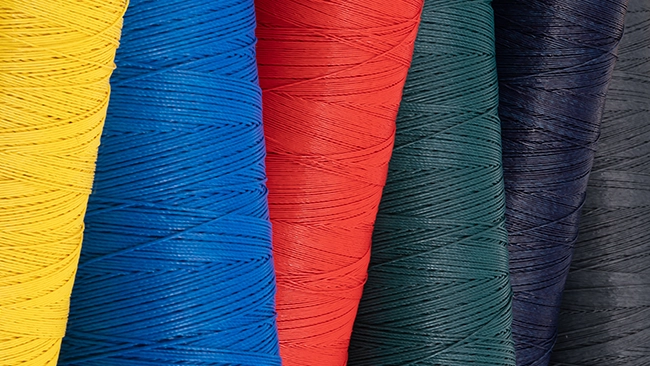
When working with tough, abrasion-resistant materials like marine vinyl, acrylics, heavy canvas, or coated fabrics, even the best sewing machines can be pushed to their limits. Lubricated sewing thread helps overcome those challenges by providing smoother, more consistent stitching in high-demand situations.
Commonly used in industrial sewing, this type of thread features a light, often silicone-based, lubricant that coats the fibers without impacting strength or appearance. This allows the thread to glide more easily through fabric and machine components, reducing drag and strain during high-speed production runs.
Needle heat is another risk this kind of thread helps avoid. By lowering friction, lubricated thread minimizes the risk of thread breakage, fraying, and skipped stitches—issues that can lead to costly rework or wasted materials. It also reduces heat buildup in the needle caused by constant fabric penetration. Excessive needle heat can weaken the thread over time or even damage heat-sensitive fabrics, so reducing it helps maintain both seam integrity and fabric quality.
The Benefits of Lubricated Sewing Thread
- Reduces friction and thread breakage – Smooth passage through fabric and machine guides means fewer interruptions and less wasted thread.
- Improves stitch consistency and overall seam quality – Helps create uniform tension and balanced stitches, even at higher speeds.
- Prolongs the life of both thread and machine components – Lower wear on needles, guides, and tension disks extends maintenance intervals.
- Minimizes needle heat – Protects delicate coatings and finishes from heat distortion.
- Enhances performance with challenging fabrics – Especially beneficial for multi-layer seams, thick assemblies, and coated or laminated textiles.
When to Avoid Using Lubricated Thread
In fast-paced production environments, efficiency is as important as durability. Lubricated thread offers both, making it an excellent choice for professionals producing outdoor gear, marine covers, awnings, upholstery, tarps, and other heavy-duty products. Whether you're sewing a single custom project or running large-scale production, shop Trivantage for lubricated thread to ensure cleaner seams, longer-lasting equipment, and a smoother overall workflow.
Written By

Kelsey D. Fox