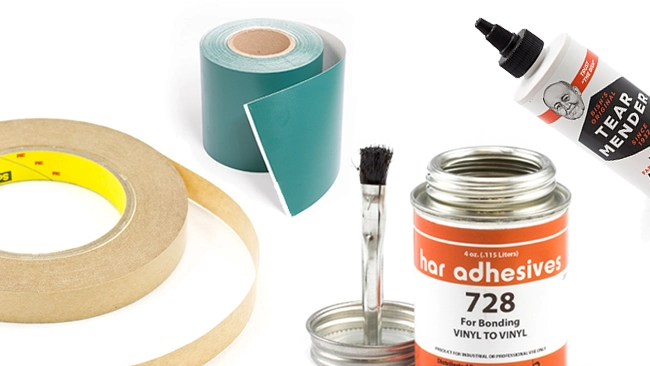
When it comes to upholstery, your choice of adhesive (i.e., type, brand, ingredients, etc.) can be the difference between a beautiful finished product and a nightmare. That said, with so many options available, it’s important to understand the different types of adhesives, their applications, and what makes the best ones stand out.
How To Choose the Right Adhesive
Before you buy, it’s important to match the adhesive to your materials, the environment, and how you plan to apply it so your project performs as expected.
Substrates: What You're Bonding
To choose an adhesive that works with your materials, consider how each substrate bonds and any finishes or coatings on the materials.
Common Fabric
For common fabric types, keep these guidelines in mind:
- Acrylic (solution-dyed outdoor canvas): Protective finishes resist bonding; use double-sided basting tapes for positioning and plan to sew for long-term seams.
- Polyester or nylon: Slick, low-porosity surfaces; clean thoroughly, lightly abrade if appropriate, and choose adhesives with strong peel resistance.
- Cotton or canvas: Porous and generally easy to bond; apply thin, even coats and consider a second coat to prevent soak-in.
- Vinyl or PVC-coated fabrics: Use vinyl cement for vinyl-to-vinyl chemical welds; use a plasticizer-resistant contact adhesive for bonding vinyl to wood, metal, or certain plastics.
- Leather: Natural oils can inhibit adhesion; degrease, lightly abrade the flesh side if appropriate, and use a flexible, leather-rated adhesive.
Foam Substrates
For foam substrates, select foam-safe options that won’t damage the material:
- Polyurethane foam: Choose foam-safe spray or brush adhesives; avoid harsh solvents unless the product is specifically rated safe for foam.
- Closed-cell foams (PE, EVA, XLPE): These can be challenging; look for LSE-compatible adhesives or primer systems as directed by the manufacturer.
- Polystyrene (EPS): Extremely solvent-sensitive; use water-based or EPS-safe formulas only.
Hard Surface Substrates
For hard surfaces, prioritize surface prep and compatibility:
- Wood or composites: Seal porous edges with a light primer coat, then apply a full coat; ensure surfaces are clean, dry, and dust-free.
- Metal: Remove oils and oxidation, then lightly abrade; choose a contact adhesive with suitable temperature resistance.
- Plastics: ABS and PVC typically bond well; polyethylene and polypropylene may require specialty primers. Always test first.
Environment: Indoor, Outdoor, Heat, and UV
To make sure the bond holds up, match adhesive performance to where and how it will be used:
- For high temperatures, choose a heat-rated formula: Automotive interiors and sun-exposed areas can exceed 160–200°F; select high-heat (headliner-rated) adhesives.
- For water and salt exposure, favor waterproof flexibility: Marine and outdoor projects benefit from waterproof, flexible chemistries; vinyl cement excels for vinyl-to-vinyl seams and patches.
- For UV exposure, protect or specify accordingly: Many adhesives are not UV-stable; keep bond lines out of direct sun when possible or choose UV-rated options.
- For temperature swings, look for resilience: Select adhesives with flexible bond lines and broad service temperature ranges to handle seasonal changes.
Permanence: Temporary to Permanent
To align performance with your project’s service life and maintenance needs, decide how long the bond should last:
- For temporary positioning, use clean, removable aids: Double-sided seam tapes and basting sprays hold materials in place before sewing and are designed for clean removal or to be sewn through.
- For semi-permanent installs, balance hold and access: Pressure-sensitive tapes or select spray adhesives can secure panels or trim that may need future service.
- For permanent bonds, select long-term solutions: Contact adhesives are ideal for dissimilar materials; vinyl cements create a flexible, waterproof weld for vinyl-to-vinyl.
Application Method: Brush, Spray, or Tape
To fit your workflow and project scale, choose an application method that delivers clean coverage and the right working time:
- For precise seams and edges, go with brush or roller: Brushable contact and vinyl cements provide control with minimal mess and no overspray—great for edges, trim, and small panels.
- For broad coverage, consider spray application: Adjustable-pattern sprays offer fast, even coverage on foam and large surfaces; control overspray and ensure proper ventilation.
- For instant, no-cure assembly, use tapes: Double-sided tapes bond on contact and are excellent for hems, basting before sewing, and sealing tasks.
- For timing, plan your working window: Traditional contact cements allow little to no repositioning once dry-to-touch, while some water-based systems offer longer open times for complex assemblies.
Types of Upholstery Adhesive
Artistry, skill, the type of fabric, and the adhesive you use all play a critical role in the finished product. Whether you’re interested in securing a long-lasting bond or maintaining the quality of the fabric, the adhesive you work with has a lot of implications.
Fabric Glue
It’s not easy to bond one fabric to another. However, fabric glues are specifically designed for bonding fabrics. They’re washable and even remain flexible after drying. Upholstery glues come in liquid or gel form and are applied directly to material surfaces. Materials are then joined while the glue is still wet, creating a bond during the drying or curing process.
- What to look for: Your fabric glue should be heat- resistant and shouldn’t affect the fabric's flexibility.
- Uses: Great for mending tears or bonding fabrics in places where sewing isn’t possible or feasible.
- Best Options at Trivantage: Tear Mender Adhesive comes in a variety of available sizes and offers a strong bond, ideal for small upholstery projects & fabric tears, depending on your needs.
Adhesive Tapes
Adhesive fabric tapes come in a variety of materials, colors, and bond longevity. Some are ideal for temporary bonds, while other adhesive fabric tape options offer a permanent bonding solution. Adhesive fabric tape bonds are virtually immediate and rarely require drying or curing.
Be sure to double-check product details when shopping for adhesive fabric tapes, as non-adhesive fabric strips are often labeled “fabric tape.”
Before you select an adhesive tape, it’s important to understand its function and limitations to avoid a bad outcome. Generally, the best type of adhesive tape for your project depends on the materials you are bonding, how long it needs to last, the project’s final use purpose, and many other factors.
- What to look for: Choose fabric adhesive tape that offers the desired bond longevity and is chemically compatible with the fabric or material you plan to bond.
- Uses: Ideal for reinforcing seams or areas of stress on a fabric.
- Best Options at Trivantage: We offer a wide selection of adhesive tapes to fit all types of projects, including Super Seamstick/Hi-Tack Adhesive Tape, often used for temporary bonding before sewing, Super Kwik Patch Repair Tape, an option primarily used for patching vinyl, and Emseal UST Awning/Sign Sealant Tape that is self-expanding and acts as an alternative to caulk.
Vinyl Cement
Vinyl Cement, as the name suggests, is engineered for use on vinyl materials, dries quickly, and creates a long-lasting bond. Ideal for marine applications, vinyl cement is waterproof, flexible, and can withstand extreme temperatures.
- What to look for: Vinyl cement should be considered if your project requires a permanent bond between vinyl material or vinyl-coated fabrics, especially if the application will benefit from additional water resistance.
- Uses: Usually best for marine vinyl applications, automotive upholstery, outdoor repairs, and other heavy-duty projects.
- Best Options at Trivantage: Depending on the type of project, scope, and materials, shop five different sizes of HH-66 Vinyl Cement, HAR Bonded Vinyl-Laminate Adhesive 730, or HAR Vinyl Seam Sealer Adhesive 729.
Contact Adhesive
Contact adhesives, sometimes referred to as contact cement, are versatile and can create strong, durable bonds between a wide range of materials. They’re known for their high strength and durability. What makes them stand out is that they allow for initial adjustments and then bond instantly upon contact.
- What to look for: It should be repositionable initially to allow adjustments and should offer a permanent adhesive bond once set. Otherwise, one mistake in the first phases of application could lead to a permanent disaster.
- Uses: Usually best for automotive upholstery, outdoor applications, or heavy-duty projects requiring permanent adhesive bonds between different materials.
- Best Options at Trivantage: Shop an array of contact adhesives engineered for longevity, including HAR Cotton Duck Adhesive 740, ideal for bonding canvas fabrics, HAR Neoprene Coated Fabric Adhesive 628, and more.
Foam Adhesive
Foam adhesives are formulated to bond foam to foam or to fabric and other substrates without degrading the material. They set quickly and remain flexible, so cushions and pads keep their shape and feel.
- What to look for: Choose a foam-safe formula that won’t pit or melt the foam, with low VOC/odor and a flexible bond line. Verify compatibility with your specific foam type and test on a scrap when possible.
- Uses: Ideal for bonding foam in cushions, seats, headliners, and mattresses where a soft, flexible bond is needed.
- Best Options at Trivantage: HAR AlbaChem Foam and AlbaChem® Dri-Web Foam Adhesive, and more.
Spray Adhesives
Adhesive sprays come in aerosol cans for fast, even coverage over large areas. They’re easy to apply and helpful when working with foam, headliners, and wide panels.
- What to look for: A nozzle with adjustable spray patterns, high-temp formulations for automotive headliners, and foam-safe chemistry when working with upholstery foams.
- Uses: Suitable for common upholstery fabrics and materials when used as directed.
- Best Options at Trivantage: Clearco Spray Adhesive 444, AlbaChem® Headliner Adhesive, and more.
Application Essentials
Getting the most from your adhesive comes down to preparation, conditions, and technique. Use the steps below to set your project up for success.
Surface Prep
Proper surface preparation ensures the adhesive can make full contact and develop strength.
- For cleaning and degreasing, wipe with isopropyl alcohol (IPA) or a manufacturer-approved solvent, then allow surfaces to dry completely before applying adhesive.
- For glossy or vinyl fabrics, lightly abrade the bonding area with a fine abrasive pad to increase mechanical grip, then remove dust with a clean, lint-free cloth.
- For vinyls with plasticizer migration, remove surface oils/plasticizers using the cleaner specified by the adhesive manufacturer, and let the surface dry fully before bonding.
Conditions
Adhesives are sensitive to temperature and humidity, so set your workspace accordingly.
- For temperature control, follow the product’s minimum application temperature and avoid bonding below about 65°F unless the adhesive is rated for cold application.
- For humidity and acclimation, keep humidity within the recommended range and let materials acclimate to shop conditions before you start.
Test First
A quick test prevents surprises and helps you fine-tune your process.
- For compatibility and finish safety, make a small test bond on scrap pieces and check for staining, melting, or poor adhesion after both the initial set and full cure.
Pressure
Even and firm pressure is essential to achieve maximum contact and strength.
- For best results, use a seam roller or J‑roller to apply uniform pressure across the bond line, paying extra attention to edges and corners, and follow the product’s recommended pressure time.
Cure
Respecting set and cure times ensures the bond reaches its designed performance.
- For durability, wait until the adhesive reaches handling strength before moving parts, and allow full cure before stressing the bond, sewing nearby, or exposing it to moisture or heat.
Cleanup
Clean tools and work areas promptly for a professional finish and easier maintenance.
- For adhesive residue and overspray, use the cleanup solvent recommended by the manufacturer, protect nearby surfaces with masking, and follow safe handling and disposal practices for used rags and solvents.
Safety and Compliance
Many upholstery adhesives contain solvents and propellants that require careful handling. Follow these guidelines to protect your team and comply with regulations.
Ventilation and PPE
Proper airflow and protective gear reduce exposure and improve comfort while you work.
- For ventilation, use local exhaust or work outdoors when spraying, and avoid confined, unventilated spaces.
- For personal protection, wear a respirator rated for organic vapors when atomizing solvents, along with chemical-resistant gloves and eye protection to prevent skin and eye contact.
Flammability and Storage
Adhesives and aerosols can be flammable, so control ignition sources and store products correctly.
- For fire safety, keep away from open flames, sparks, and hot surfaces, and turn off pilot lights before use.
- For storage and handling, store containers upright in a cool, dry area away from heat, follow manufacturer storage temperature limits (especially for aerosol sprays), and observe any shipping or HAZMAT notices on labels and SDS.
VOC and Local Regulations
Air-quality rules vary by region, so choose products and processes that meet local requirements.
- For compliance, consider low‑VOC options when available, review the product’s SDS and technical data sheet, and check regional regulations before purchase and use.
Browse Our Selection of Adhesives
Before you buy an adhesive for fabric or vinyl, you’ll need to consider bond -strength, water-resistance, the type of upholstering materials you’re bonding (i.e., suede, silicone, concrete, etc.), and many other factors.
Need help figuring out which solution is best for your project? We’re here to help, every day, every step of the way.
- Check out Trivantage's selection of fabric adhesives and tapes today.
Written By

Kelsey D. Fox